This article has been updated to reflect 2026 data and recent developments.
Closing the achievement gap remains one of the most urgent challenges in American public education. The term refers to persistent disparities in academic performance between groups of students, often defined by income level, race, ethnicity, and access to resources. While the gap has not disappeared, recent data and policy changes show measurable progress in several areas.
Public schools across the country are implementing targeted strategies that combine funding reforms, instructional innovation, and student support systems. These efforts, particularly since 2024, reflect a broader shift toward equity-driven education policy and data-informed decision-making.
Understanding the Achievement Gap in 2026
Recent data from the National Center for Education Statistics shows that achievement gaps in math and reading narrowed slightly between 2022 and 2024, particularly in early elementary grades, though disparities persist in middle and high school levels. Pandemic-related learning loss continues to influence outcomes, but recovery efforts are beginning to show results.
Key trends shaping the current landscape include:
- Increased federal and state investment in high-need districts
- Expanded access to early childhood education
- Greater emphasis on data tracking and accountability
- Growth in targeted intervention programs
According to the NCES, students in high-poverty schools are still significantly less likely to meet proficiency benchmarks, reinforcing the need for sustained intervention.
Key Strategies Public Schools Are Using
1. Expanding Early Childhood Education
One of the most widely supported strategies for closing the achievement gap is investing in early learning. Research consistently shows that students who attend high-quality preschool programs enter kindergarten better prepared academically and socially.
Since 2024, several states have expanded universal pre-K access, particularly for low-income families. These programs focus on:
- Language development
- Early literacy and numeracy
- Social-emotional learning
The long-term impact is significant, with early gains often carrying through elementary school.
2. Targeted Funding and Resource Allocation
Funding remains a critical factor in addressing inequities. Recent policy shifts have focused on directing more resources to schools serving disadvantaged populations.
Many states have adopted weighted funding formulas, allocating additional dollars for:
- Low-income students
- English language learners
- Students with disabilities
This approach contrasts with traditional funding models that often reinforced disparities. For more context on how funding impacts school quality, see https://www.publicschoolreview.com/blog/public-school-funding-2025-what-families-should-know.
At the federal level, continued investments through Title I and pandemic recovery funds have supported tutoring programs, technology upgrades, and extended learning time.
3. Reducing Class Sizes in High-Need Schools
Smaller class sizes allow for more individualized instruction, which is especially important for students who need additional support.
Research continues to support the connection between class size and student achievement, particularly in early grades. Schools serving high-need populations are increasingly prioritizing:
- Lower student-to-teacher ratios
- Instructional aides and co-teaching models
- Targeted small-group instruction
You can explore how class size impacts learning outcomes in more detail here: https://www.publicschoolreview.com/blog/class-size-in-public-schools-impact-on-learning.
4. High-Impact Tutoring and Intervention Programs
One of the most effective post-pandemic strategies has been high-dosage tutoring. These programs provide consistent, small-group or one-on-one instruction multiple times per week.
According to recent studies from the U.S. Department of Education, students participating in structured tutoring programs showed measurable gains in both math and reading within a single academic year.
Common features of successful programs include:
- Trained tutors aligned with classroom instruction
- Frequent sessions, at least three times per week
- Data-driven progress monitoring
5. Strengthening Teacher Quality and Retention
Teacher effectiveness remains one of the most important in-school factors influencing student achievement. Schools are focusing on both recruitment and retention, particularly in underserved areas.
Key initiatives include:
- Increased teacher salaries and incentives
- Mentorship and professional development programs
- Loan forgiveness for educators in high-need schools
Teacher shortages, particularly in STEM and special education, remain a concern. For a deeper look at compensation trends, visit https://www.publicschoolreview.com/blog/public-school-jobs.
6. Data-Driven Instruction and Accountability
Modern public schools are using data more strategically than ever before. Real-time assessment tools allow educators to identify learning gaps early and adjust instruction accordingly.
This shift includes:
- Frequent formative assessments
- Personalized learning plans
- School-wide data dashboards
Districts are also being held more accountable for subgroup performance, ensuring that improvements benefit all students, not just overall averages.
7. Community Schools and Wraparound Services
A growing number of districts are adopting the community school model, which integrates academic instruction with health, social, and family services.
These schools often provide:
- On-site mental health support
- After-school programs
- Family engagement resources
- Access to healthcare and nutrition
Research from the Learning Policy Institute in 2024 found that community schools improved attendance, academic outcomes, and family engagement in high-poverty areas.
Progress and Ongoing Challenges
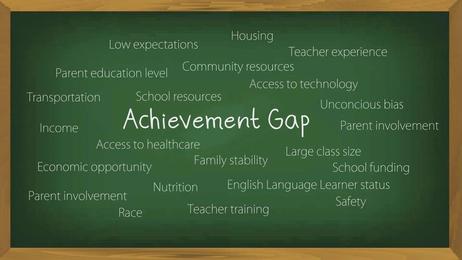
While these strategies are making a difference, challenges remain. Achievement gaps are deeply rooted in broader socioeconomic inequalities, which schools alone cannot fully address.
Persistent barriers include:
- Housing instability and poverty
- Unequal access to technology outside school
- Variability in state funding systems
- Teacher shortages in critical areas
However, the progress seen in early grades and targeted programs suggests that sustained, well-funded efforts can yield meaningful results.
Snapshot: Strategies and Impact
| Strategy | Primary Goal | Observed Impact (2024–2026) |
|---|---|---|
| Early childhood education | School readiness | Improved literacy and math skills |
| Targeted funding | Resource equity | Better access to programs |
| Smaller class sizes | Individualized instruction | Higher engagement and outcomes |
| High-impact tutoring | Accelerated learning recovery | Measurable academic gains |
| Teacher investment | Instructional quality | Improved retention rates |
| Community schools | Whole-child support | Better attendance and engagement |
What This Means for Parents and Communities
For parents, understanding how schools are addressing the achievement gap can provide valuable insight into school quality and priorities. When evaluating a public school, consider:
- Availability of support programs such as tutoring or counseling
- Class sizes and teacher experience levels
- Access to advanced coursework and enrichment
- Evidence of strong leadership and community engagement
Schools that actively implement equity-focused strategies are often better positioned to support diverse learners and improve outcomes for all students.
Conclusion
Closing the achievement gap in public schools is a complex, long-term effort, but recent developments show that progress is possible. With targeted funding, innovative instruction, and a focus on the whole child, many schools are beginning to narrow disparities that have persisted for decades.
As policies continue to evolve and data becomes more precise, the most effective approaches will likely combine academic rigor with comprehensive student support. For families and educators alike, staying informed about these strategies is essential to ensuring that every student has the opportunity to succeed.