Overview of the Funding of Public Schools (2026 Update)
Understanding the funding of public schools is essential for parents, educators, and policymakers alike. School funding shapes everything from class sizes and teacher salaries to extracurricular offerings and facility quality. While the basic structure of funding has remained consistent for decades, recent policy shifts, economic pressures, and post-pandemic recovery efforts have made 2026 an especially important moment to revisit how public education is financed in the United States.
This updated overview explains where school funding comes from, how it is distributed, and why disparities persist across districts.
The Three Primary Sources of Public School Funding
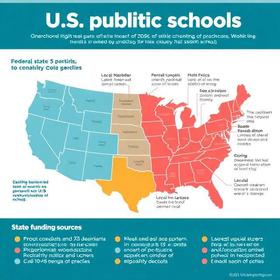
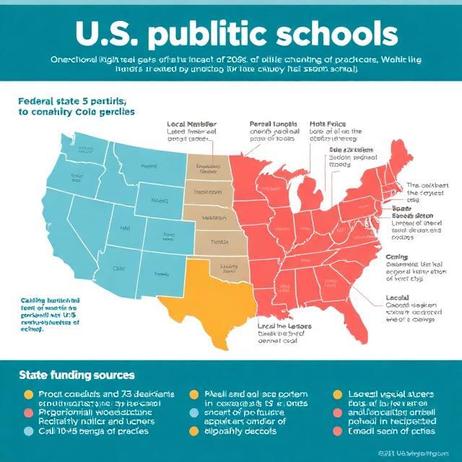
Public schools in the United States are funded through a combination of federal, state, and local sources. Each plays a distinct role, with varying levels of influence depending on the district.
1. Local Funding: Property Taxes and Community Wealth
Local funding remains the largest contributor in many districts, primarily through property taxes. Communities with higher property values generate more revenue, which often translates into better-funded schools.
Key characteristics of local funding:
Based on property tax assessments
Controlled by local school boards and municipalities
Highly variable between districts
This system creates significant disparities. Affluent areas can afford modern facilities, advanced coursework, and smaller class sizes, while lower-income districts may struggle to meet basic needs.
For a deeper look at how school quality varies by location, see Why Public School District Boundaries Matter.
2. State Funding: Equalization Efforts
State governments attempt to balance inequities through funding formulas that redistribute resources. These formulas typically consider:
Student enrollment
Income levels
Special education needs
English language learner populations
According to the National Center for Education Statistics, state funding now accounts for roughly 45–50% of total public school revenue nationwide.
Many states have updated their formulas since 2020 to include “weighted funding,” which allocates additional resources for students with greater needs. However, the effectiveness of these reforms varies widely.
3. Federal Funding: Targeted Support
Federal funding represents the smallest share, typically around 8–10% of total funding, but it plays a critical role in supporting vulnerable populations.
Major federal programs include:
Title I, which supports low-income students
IDEA (Individuals with Disabilities Education Act) funding
School nutrition programs
Pandemic recovery funds, including ESSER allocations
You can explore federal education funding data through the U.S. Department of Education.
How Public School Funding Is Distributed
Funding is not simply divided evenly among schools. Instead, districts use allocation models that determine how money flows to individual campuses.
Common Allocation Methods
Per-pupil funding: Schools receive a set amount per student
Weighted student funding: Additional funds for students with specific needs
Program-based funding: Resources earmarked for specific initiatives
Weighted funding models have gained traction in recent years because they aim to address inequities more directly.
A Snapshot of Funding Sources
|
Funding Source |
Typical Share |
Primary Purpose |
|
Local |
40–50% |
Core operations, facilities |
|
State |
45–50% |
Equalization, teacher salaries |
|
Federal |
8–10% |
Targeted support programs |
These proportions can vary significantly by state. For example, states like Vermont rely more heavily on state funding, while states like Texas depend more on local property taxes.
Key Challenges in Public School Funding
Despite ongoing reforms, several persistent challenges continue to shape the funding of public schools.
Inequity Between Districts
The reliance on property taxes creates structural inequality. Students in lower-income communities often attend underfunded schools, even when state aid is factored in.
A 2025 report from the Education Law Center highlights that many states still fall short of providing adequate and equitable funding.
Rising Costs and Inflation
School districts are facing increased costs in:
Teacher salaries
Transportation
Technology infrastructure
Mental health services
Post-pandemic inflation has further strained budgets, forcing districts to make difficult trade-offs.
Declining Enrollment
Many districts are experiencing enrollment declines, which directly impact funding tied to student numbers. This trend is especially pronounced in urban areas and has led to school closures and consolidation.
Learn more about this trend in Why Are Public School Enrollments Declining?.
Expiration of Federal Relief Funds
Pandemic-era federal funding provided temporary financial stability. However, many of these funds are set to expire by 2026, creating a looming “funding cliff” for districts that relied on them.
Emerging Trends in 2026
Several trends are shaping the future of public school funding.
Increased Focus on Equity
States are refining funding formulas to better address disparities. This includes:
Greater weighting for high-need students
Targeted investments in underserved communities
Accountability measures tied to outcomes
Transparency and Public Accountability
Parents and taxpayers are demanding greater transparency in how funds are spent. Many states now require districts to publish detailed financial reports.
Expansion of School Choice Funding
Funding is increasingly following students rather than institutions. This includes:
Charter school funding
Education savings accounts (ESAs)
Voucher programs
These policies remain controversial, as critics argue they can divert funds from traditional public schools.
For a broader perspective, see Public School vs Private School: Key Differences.
Investment in Technology and Infrastructure
Districts are prioritizing:
Digital learning platforms
Cybersecurity
Modernized facilities
These investments reflect the long-term impact of remote learning during the pandemic.
Why School Funding Matters for Families
For families, understanding the funding of public schools can directly influence educational decisions.
Funding levels often affect:
Class sizes
Teacher experience and retention
Availability of advanced courses
Extracurricular opportunities
While funding is not the only measure of school quality, it is a critical factor.
Parents evaluating school options may also benefit from reviewing How to Evaluate Public Schools.
Frequently Asked Questions
How are public schools primarily funded?
Public schools are funded through a combination of local property taxes, state funding formulas, and federal programs. Local and state sources provide the majority of funding.
Why do some schools have more resources than others?
Differences in local property wealth and state funding policies lead to disparities. Wealthier communities can generate more local revenue, resulting in better-funded schools.
What role does the federal government play?
The federal government provides targeted funding for specific programs, particularly those serving disadvantaged students, but it does not fund schools directly at a large scale.
Are funding disparities improving?
Some states have made progress through revised funding formulas, but significant inequities remain in many parts of the country.
Conclusion
The funding of public schools remains a complex and evolving issue in 2026. While the combination of local, state, and federal funding provides a framework for supporting education, disparities persist, particularly between wealthy and under-resourced communities.
Recent reforms aimed at equity, transparency, and modernization offer promising steps forward. However, challenges such as inflation, enrollment shifts, and the expiration of federal relief funds continue to test the system.
For families and educators, understanding how schools are funded is more than an academic exercise. It is a practical tool for making informed decisions and advocating for better educational opportunities.