Updated
|
Parental Involvement in Public Schools: 2025 Update
Explore the latest insights, policies and best practices for parental involvement in public schools in 2025.

Introduction

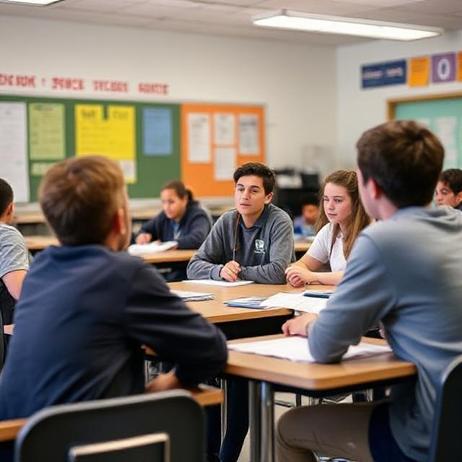
Parental involvement in public schools remains a critical ingredient in driving student success, community engagement and school improvement. In 2025, that principle holds true — but the landscape has evolved. This article updates key trends, policies, practices and research concerning parental involvement in public schools, and offers practical guidance for parents, educators and administrators alike.

Why Parental Involvement Matters

Decades of research show that when families engage meaningfully with their children’s schooling, outcomes improve. For example, one review highlights that greater parental involvement is consistently associated with higher academic achievement, increased motivation and better social-emotional outcomes.
More recent data indicate that schools reporting high levels of parent engagement see a 35 percent drop in disciplinary incidents and that 78 percent of teachers say parental support improves classroom behaviour.

In short: parental involvement is not optional. It is a key lever for strengthening school performance, improving student outcomes and building stronger school-family partnerships.

The State of Parental Involvement in 2025

Parent Sentiment

In 2025, more than half of U.S. parents (52 percent) believe education is heading in the right direction. EdChoice At the same time, only 43 percent of respondents gave their own community’s schools an A or B grade — a decline from earlier years. This suggests parents remain cautiously optimistic, but expect more robust engagement and stronger results.

Research Trends

Newer studies refine our
. . .read more

Public School Discipline, Attendance & Graduation Trends 2025

Updated
|
Public School Discipline, Attendance & Graduation Trends 2025
An authoritative breakdown of discipline, attendance and graduation trends in U.S. public schools—what parents, students and educators need to know in 2025.

Discipline, Attendance & Graduation Rates in U.S. Public Schools: 2025 Update

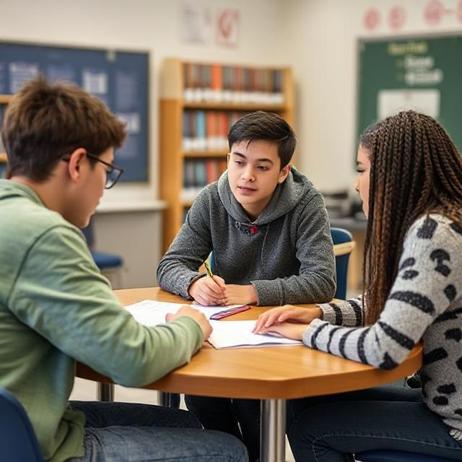
Understanding the health of public school education requires tracking key indicators such as student discipline, attendance and graduation rates. For parents, educators and students alike, these metrics provide insight into school climate, student engagement and overall system performance. This article presents the latest data (2023–25) for public schools in the United States, highlights trends, discusses implications and offers expert commentary.

1. Graduation Rates: A Strong Foundation with Lingering Gaps

One of the most encouraging signals in U.S. public school education is the consistent rise in on-time graduation. According to the National Center for Education Statistics (NCES), in the school year 2021–22 the adjusted cohort graduation rate (ACGR) for public high school students reached 87 percent, up seven percentage points from a decade earlier. National Center for Education Statistics

Key breakdowns

  • Asian/Pacific Islander students: ~94 percent

  • White students: ~90 percent

  • Hispanic students: ~83 percent

  • Black students: ~81 percent

  • American Indian/Alaska Native: ~74 percent

What this means

Public school systems are doing better in retaining, supporting and graduating students within four years. That gives parents and students greater confidence in the value of a diploma. But the

. . .read more

Public School Choice, Magnet Programs & Charter Options — What’s Best?

Updated
|
Public School Choice, Magnet Programs & Charter Options — What’s Best?
Explore public school choice in 2025: comparing magnet programs, charter schools and traditional public schools to find what’s best for your child.

Introduction

When families explore educational pathways, the phrase public school choice often emerges. In 2025, more parents, students and educators are asking: what is the right option — stay with a traditional neighborhood public school, apply for a magnet program, or consider a charter school? This article examines the core distinctions, benefits and challenges of public school choice, magnet programs and charter options, offers expert commentary and updates on current trends, and helps you determine what’s best for your child’s academic journey.

Understanding the Basics: What are the options?

Traditional Public Schools

A traditional public school is the default neighborhood school to which a student is zoned. It is directly managed by the local school district, accepts all students in its attendance area, and follows state-mandated curriculum and policies.

Magnet Programs

Magnet programs are schools of choice within the public school system that emphasise a specific theme — for example STEM, performing arts, world languages or gifted programmes. As one guide explains: “Magnet schools are free public elementary and secondary ‘schools of choice’ that operate within existing public schools in a district.”

Magnet programmes allow families to choose a school based on interest rather than geography.
Typically:

  • They draw students from across districts or large zones rather than strict neighbourhoods.

  • They may have themed curricula and offer enriched opportunities.

  • They are part of the public

. . .read more

The Role of Support Services in Public Schools: Tutoring, Counseling & More

Updated
|
The Role of Support Services in Public Schools: Tutoring, Counseling & More
Explore how tutoring, counseling and comprehensive support services enhance student success in public schools, with 2025 insights for educators, parents and students.

Introduction
In 2025, public schools face unprecedented challenges, including post-pandemic learning recovery, rising mental-health concerns and equity gaps. Support services in public schools—such as tutoring, counselling and comprehensive student-assistance programs—are more critical than ever. This article examines the role of support services in public schools, outlines best practices and offers guidance for parents, educators and students seeking to understand how these supports help achieve stronger outcomes.

1. Defining Support Services in Public Schools
Support services in public schools typically refer to three core domains: academic support (tutoring and supplemental instruction), personal-social/emotional support (counselling, wellness programmes) and wrap-around or whole-child services (mentoring, family engagement and community partnerships).

  • Tutoring and academic intervention services help students who are behind or need enrichment.

  • Counselling and wellness services address mental-health, behavioural or adjustment issues.

  • Wrap-around supports linking students with mentoring, family outreach or external agencies.
    For many school districts, these support services act together to help students remain engaged, thrive academically and develop resilience.

2. Why Support Services Matter in Public Schools
2.1 Addressing Learning Loss and Academic Gaps
The interruption of schooling caused by COVID-19 and other disruptions has increased demand for high-quality tutoring and academic support. Studies show that targeted tutoring and supplemental instruction are effective means of helping students catch up. For example, a study emphasised the benefits of one-on-one tutoring for children with special educational needs.
2.2 Supporting Mental Health and Emotional Well-being
Counselling

. . .read more

The Impact of Social Media on Students – 2025 Updated Insights

Updated
|
The Impact of Social Media on Students – 2025 Updated Insights
Explore how social media affects students’ academic performance, behaviour and wellbeing in 2025 with expert insights and policy updates.

The Impact of Social Media on Students

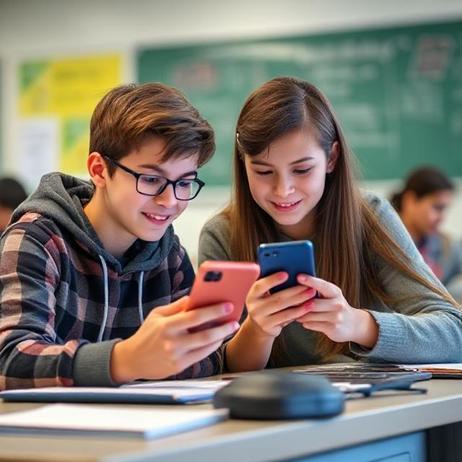
In the past decade, social media has become deeply woven into students’ everyday lives, both inside and outside the classroom. As we move into 2025, understanding the impact of social media on students—academically, socially and psychologically—is essential for parents, educators and school leaders. This article updates the original analysis with current data, evolving policies and expert commentary, while retaining the previous structure for clarity and continuity.

Introduction

The term “social media” now covers everything from short-form video apps like TikTok, to image-sharing networks such as Instagram, to collaborative platforms used by students and schools. The latest estimates show approximately 5.24 billion people worldwide are active on social media in 2025, up 4.1 % from the previous year.
For students, social media represents both potential advantages (such as connected learning and peer collaboration) and clear risks (including distraction, mental-health concerns and reduced focus).
The remainder of this article explores the current state of social media use among students, its academic implications, behavioural and mental-health effects, evolving school policies, strategies for positive use, and recommendations for families and educators.

Current Usage Patterns

Recent studies indicate that social media usage remains high among young people and students. Global figures show that 63.9 % of the world’s population uses social media, with an average daily time of about 2 hours 21 minutes as of February 2025. Smart Insights
For school-age students, access to digital devices is nearly universal. For example,

. . .read more

Recent Articles

When “Free Public School” Still Isn’t Free
Discover the hidden costs of public school in 2026, from supplies and fees to transportation, technology, and extracurricular expenses.
What a District Budget Cut Means for Your Child's School Experience
Learn how district budget cuts can affect class sizes, programs, staffing, transportation, and your child's daily school experience in 2026.
School Closure Risk: What Parents Should Check Before Moving
Learn how parents can assess school closure risk before buying or renting in a district, using enrollment, funding, and boundary data.