Updated
|
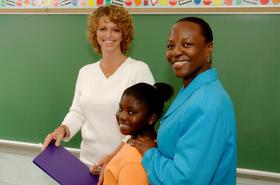
Why Are Things Becoming More Difficult For Public School Teachers?
Explore the biggest challenges facing public school teachers in 2026, from staffing shortages and funding concerns to technology demands and student support needs.

Public school teachers have a wonderful opportunity to shape the minds of the next generation. There is a great deal of satisfaction that comes from making an impact on a child’s life, but being a teacher isn’t always easy, especially in public school.

Teachers have always faced challenges, but in recent years the profession has become increasingly complex. Staffing shortages, student mental health concerns, school funding pressures, technology demands, and changing accountability systems have all added new layers of responsibility.

Keep reading to learn about some of the current challenges facing public school teachers and what they could mean for the future.

What Are the Biggest Challenges Teachers Face?

With changes in public policy, legislation, technology, and student needs, the U.S. education system is constantly changing. Before discussing some of the newer challenges facing public school teachers, it is important to recognize the issues that have existed for decades.

Some of the biggest challenges include:

  • Poorly behaved students
  • Limited resources and finances
  • Difficult parents
  • Federal requirements and standardized tests
  • Time constraints
  • Teacher shortages

Managing a classroom full of students is difficult under the best circumstances. Behavioral challenges can consume valuable instructional time and often require teachers to divide their attention between individual students and the rest of the class.

Limited resources remain another major concern. Many teachers continue to purchase classroom supplies with their own money, particularly in underfunded districts. Parents interested in learning more about how school budgets impact classrooms can explore Overview of the Funding of Public Schools (2026


. . .read more

Trending: Meal Delivery Services for Student Lunches?

Updated
|
Trending: Meal Delivery Services for Student Lunches?
Meal delivery services are all the rage these days, but could they be the solution to the school lunch problem? Keep reading to find out!

America is one of the wealthiest nations in the world and, yet, every day millions of children go hungry. In fact, more than 13 million children live in “food insecure” homes meaning that their families don’t have enough food to eat on a regular basis.

To combat child hunger, there are a number of programs that provide free or low-cost lunches for students but even these lunches aren’t always healthy. Research shows time and again just how important a healthy lunch is not only for child growth and development but also for student performance.

In this article, we’ll explore the importance of a healthy lunch for public school students as well as some of the problems facing school lunches today. We’ll also talk about a topic that is currently trending – meal delivery services for student lunches.

This TED Talk discusses the impact of school meals.

How Does a Healthy Lunch Impact Student Performance?

If you’ve ever skipped breakfast before heading to work, you’re probably familiar with that mental fog that starts to set in around mid-morning. Without a healthy breakfast to jump-start your metabolism and to provide fuel for your body, it becomes difficult to concentrate on the task at hand. Now, imagine experiencing that on a daily basis as a child.

While there is no doubt that missing meals can have a detrimental effect on child growth and student performance, new research

. . .read more

Where Did the Members of the 115th House of Representatives Go to School?

Updated
|
Where Did the Members of the 115th House of Representatives Go to School?
Find out where the members of the 115th House of Representatives went to school and how many chose private school over public school for their own children.

The world of education in the United States is in a constant state of flux. Year after year, educational reform and new policies are passed that change the face of American education. As such, it is important to consider the educational background of the people who are representing the American public in approving or denying these policies and reforms.

We completed a survey of the 115th House of Representatives to gather insite of the U.S. House of Reformation about the educational background of its members. We also gathered information about the type of education each Representative chose for his or her children. The results of that survey are summarized below along with some interesting points and thought-provoking questions.

Background on the United States Congress

The United States Congress is made up of the Senate and the House of Representatives. Members of both are chosen through direct election, though it is possible for vacancies on the Senate to be filled via gubernatorial appointment. Congress is made up of a total of 535 voting members.

The Senate is comprised of 100 senators which are elected at large by their constituents for a six-year term. Two representatives are allocated to each state. The House of Representatives is comprised of 435 voting members as well as six non-voting members that represent Puerto Rico, the U.S. Virgin Islands, American Samoa, Guam, the Northern Mariana Islands, and Washington, D.C. Members of the House of Representatives serve two-year terms, each representing a single

. . .read more

How Much Does It Cost to Educate a Child?

Updated
|
How Much Does It Cost to Educate a Child?
Every year, standardized tests reveal that public school performance is woefully low. Yet you pay taxes to fund public education, so where does that money go? Keep reading to find out how much it really costs to educate your child.

When you think of how your child’s education is going to cost, you probably think of the expenses you cover yourself. From school books and uniforms to daily lunches, transportation to and from school, and extra educational materials at home, the costs add up quickly. But what about the costs you don’t cover? Things like teacher salaries, school maintenance and repairs, taxes, and more – someone has to pay these costs, but who?

If your child attends public school, it is likely that the majority of the cost of his education will be shouldered by the government (federal and state as well as local). One might argue that your taxes pay for a portion of those costs, but it is nowhere near the thousands of dollars it actually takes to send your child to public school for a year.

Depending on where you live and the quality of the local education system, you may be wondering just where all of that money goes. In this article, we’ll discuss the average annual cost to educate a student in different states as well as some of the ways your tax dollars are spent.

This video from The Cato Institute examines the cost of public K-12 education.

Annual Costs for Public Education by State

Spending varies drastically for public education from one part of the country to another. The biggest spender is New York, shelling out over $20,000

. . .read more

Your Guide to Understanding the Charter School Debate

Updated
|
Your Guide to Understanding the Charter School Debate
Changes instigated by the Trump Administration have been met with a great deal of controversy but one of the biggest debates within the education sector is in regard to integration and charter schools. Keep reading to learn more about the charter school debate and what you should know as a parent.

When it comes to schools in the United States, the biggest differences lie in the gap between public and private school. What many people do not realize, however, is that there are many different subcategories for each.

For example, a charter school is an independently run public school that has greater flexibility than a traditional public school. Charter schools still need to meet state standards, but a significant portion of their curriculum and operation is influenced by the school’s “charter” – a performance contract that details the school’s mission, as well as the students served, specific performance goals, and its methods of assessment. As modern reform continues to shake the foundation of the United States education system, a debate about charter schools has risen to the forefront.

In theory, charter schools exist to provide underprivileged students with access to better education. The primary question, however, is whether charter schools inadvertently support segregation. Keep reading to learn more about charter schools and how they are changing the face of the U.S. education system.

Understanding the Basics Of Charter Schools

According to the National Alliance for Public Charter Schools (NAPCS), there are roughly 6,900 charter schools in the United States. Though they are technically public schools and therefore open to a wide range of students tuition-free, charter schools work differently than traditional public schools. A charter school operates under an independent contract (known as a “charter”) in front of an authority such as a government agency,

. . .read more

Recent Articles

When “Free Public School” Still Isn’t Free
Discover the hidden costs of public school in 2026, from supplies and fees to transportation, technology, and extracurricular expenses.
What a District Budget Cut Means for Your Child's School Experience
Learn how district budget cuts can affect class sizes, programs, staffing, transportation, and your child's daily school experience in 2026.
School Closure Risk: What Parents Should Check Before Moving
Learn how parents can assess school closure risk before buying or renting in a district, using enrollment, funding, and boundary data.