About Public Schools

Here we cover the history of public schools, explain the various types and discuss their pros/cons. Learn more about technology on campus, health and nutrition issues, and the latest information related to a variety of student populations.

View the most popular articles in About Public Schools:

How Schools are Governed and Funded

Updated
|
How Schools are Governed and Funded
Explore the differences in governance and funding models between charter schools, traditional public schools, and private K-12 schools. Gain insights into how these factors shape educational experiences and outcomes for students.

As the education landscape evolves, it is essential to examine different schooling options and understand their strengths, weaknesses, and overall impact on students' educational experiences. In this article, we will compare three primary education models: charter schools, traditional public schools, and private K-12 schools, concerning governance and funding.

Charter Schools

Charter schools are publicly funded schools that operate under a charter or contract, which grants them increased autonomy and flexibility compared to traditional public schools. Individuals, organizations, or groups typically establish charter schools with a specific educational vision or focus.

Charter schools are independent public schools free to innovate while being held accountable for improved student achievement. They foster a culture of creativity, flexibility, and autonomy that allows teachers and school leaders to design and implement effective educational models tailored to the needs of their students. - National Alliance for Public Charter Schools

Governance Structure

Charter schools usually have their governing boards responsible for making important decisions regarding curriculum, budget allocation, hiring, and overall school policies. These boards can include parents, community members, educators, and experts from various fields. The thin governance structure allows for more localized decision-making. It promotes flexibility in responding to the needs of students and the community than is possible in an administration with more layers of management.

Flexibility in Curriculum and Management

One of the key features of charter schools is their flexibility in designing their curriculum and educational approach. Charter schools can develop specialized
. . .read more

Junior Reserve Officers Training Corps or JROTC

Updated

|
Junior Reserve Officers Training Corps or JROTC
JROTC offers valuable lessons in leadership, character-building and citizenship. Here's a look at the various JROTC programs out there together with a look at the pros and cons of the program.

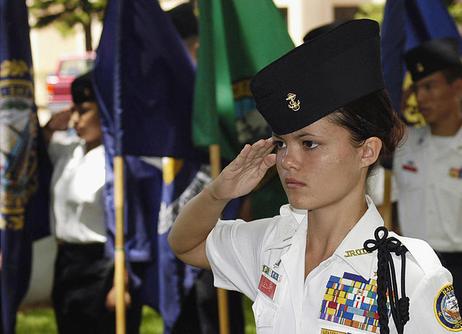
Wikimedia.commons.org, public domain/PH3 Victoria A. Tullock, USN

Junior Reserve Officers Training Corps or JROTC

I was disappointed to read the story in the New York Times about abuse in an Army JROTC program. Why? Because I've always thought very highly of the program available in over 1700 public and private high schools. I will further disclaim that my eldest daughter was in the ROTC program at MIT while she was at Harvard. So, I know first-hand that it is well-run for the most part. The JROTC does an immense amount of good for young people at the high school level.

What is JROTC?

Congress established the JROTC or Junior Reserve Officers Training Corps in 1916. Each branch of the services has its own distinctive JROTC program. However, they all have the altruistic-sounding mission "To Motivate Young People to be Better Citizens."

The U.S. Army Junior Reserve Officers’ Training Corps (JROTC) is one of the largest character development and citizenship programs for youth in the world. Source: JROTC

  • Some people think that JROTC is a recruiting program for the military.
  • But it is not. Indeed, most JROTC participants do not join the military after graduating from high school.
  • Nor are they required to do so.
  • On the other hand, the college-level ROTC programs do require their participants to sign up for a tour of duty after graduating from college.
  • Simply put, the JROTC
. . .read more

Post-Pandemic Tips for Public School Parents and Students

Updated
|
Post-Pandemic Tips for Public School Parents and Students
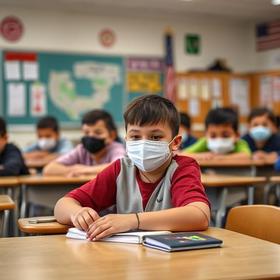
The 2020-21 school year was unlike any other and hopefully not one we’ll repeat anytime soon. The COVID-19 pandemic changed the face of America’s public education system and we’re still seeing the effects. In this article, we’ll explore the impact of the pandemic on America’s public schools, see how they responded, and talk about some tips for returning to in-person education this fall.

After a year and a half struggling to survive a global pandemic, the world is finally starting to get back to normal. Though challenges brought by the rising Delta variant still exist, many schools are planning to return to in-person instruction in the coming fall. This news comes as a welcome relief to parents who have had to juggle supervising their child’s remote education while continuing to work their own jobs.

Though the COVID-19 pandemic left no one unaffected, it exacerbated a number of existing issues within the public school system and created some new challenges. Returning to school in the fall of 2021 won’t be smooth sailing and parents had better start preparing themselves (and their children) now to ensure as seamless a transition as possible.

In this article, we’ll explore some of the effects the COVID-19 pandemic had on public school systems and talk about what the future holds. We’ll also provide helpful tips for students, parents, and educators as they anticipate their return to school in the fall.

Impact of the Pandemic on Public Schools

In March of 2020, the World Health Organization declared the spread of COVID-19 a worldwide pandemic. Being in the middle of their second semester, schools across the country (and around the world) were sent scrambling to make adjustments. Many schools closed for in-person instruction entirely, switching to virtual learning, and many parents withdrew their children from schools entirely in favor of teaching them at home.

In a March

. . .read more

Managing Stress and Moving Forward from the Pandemic

Updated
|
Managing Stress and Moving Forward from the Pandemic
As more schools return to in-person learning, teachers and parents find themselves dealing with the trauma and stress created by the pandemic.

After a long and difficult year, there is finally a light at the end of the tunnel. With over 60% of the U.S. population having received at least one dose of the COVID-19 vaccine, things are looking up. COVID restrictions are being lifted, businesses are reopening, and children are returning to school. Though we have much to be thankful for, the scars left behind by a dark and challenging year won’t soon fade.

The COVID-19 pandemic has changed the state of the American public education system in deep and sometimes disturbing ways. Existing disparities between affluent children and low-income students have grown and it may take years of hard work and massive change to overcome them. What many educators are focusing on now as the world starts to return to normal isn’t catching students up on lost education in core subjects like math and science – it’s helping them cope with the stress of a year-long pandemic.

Millions of children around the globe have suffered from a year of isolation from friends and sporadic education. In this article, we’ll explore the subject of pandemic-related stress and provide helpful tips for parents and educators to support their children in the upcoming school year.

Traumatic Stress Caused by the COVID-19 Pandemic

Adam D. Brown, PsyD, a clinical assistant professor in the Department of Child and Adolescent Psychiatry at NYU Longone discusses the notion of traumatic stress in children and how the COVID-19 pandemic has affected millions of children

. . .read more

How Has the Pandemic Changed Public School?

Updated
|
How Has the Pandemic Changed Public School?
After more than a year of remote learning, schools are finally returning to in-person instruction but how has the pandemic changed the face of public education and what will it look like moving forward?

Just a few months after the dawn of a new decade, millions of parents found themselves scrambling to adjust to remote learning in the midst of a rapidly spreading global pandemic. It didn’t take long for parents to realize just how much they’d been leaning on the public school system until their kids were at home full-time. Parents became teachers overnight, struggling to maintain some sense of normalcy in regard to their child’s education, all while trying to manage changes in their own day-to-day lives.

A full year later, parents and educators are still struggling, and the country is facing some difficult questions about the state of America’s public school system. In some cities, affluent families have abandoned the public school system in favor of private schools but what effect with this mass exodus have on the future of public schooling? In this article, we’ll explore the ways the pandemic has changed public school systems and what parents can expect in the future.

The Current State of Public Education

After months of remote learning, many schools have started to return to in-person education. Though many schools are following a blended approach, teaching students both in-person and virtually, parents are finally starting to see a return to “normal” after a year of chaos. What school really looks like for students varies, however, depending on a variety of factors.

In some communities, schools are only open to teachers and administrators who continue to teach remotely. Other districts have opened their

. . .read more

Recent Articles

When “Free Public School” Still Isn’t Free
Discover the hidden costs of public school in 2026, from supplies and fees to transportation, technology, and extracurricular expenses.
What a District Budget Cut Means for Your Child's School Experience
Learn how district budget cuts can affect class sizes, programs, staffing, transportation, and your child's daily school experience in 2026.
School Closure Risk: What Parents Should Check Before Moving
Learn how parents can assess school closure risk before buying or renting in a district, using enrollment, funding, and boundary data.

About Public Schools

OVERVIEW OF PUBLIC SCHOOLS
A comprehensive look at the U.S. public school system, including history, governing bodies, funding, and services. Compare private, public and charter schools. Learn more about Magnet school programs and get tips on choosing the right school for your child.
TYPES OF PUBLIC SCHOOLS
Explore the different types of public schools, from charter to language immersion, and learn about the unique pros and cons of each type. Is a co-ed or single sex classroom best for your child? Charter school or magnet? Read expert advice and get valuable tips on the various public education programs available and how to choose what works best for your family.
TECHNOLOGY ON CAMPUS
From eBooks to web cams, technology on campus continues to grow. Learn how the latest technology impacts your child’s education. Get tips on the best ways to integrate technology into education and stay abreast of the latest developments and challenges facing schools.
HEALTH AND NUTRITION AT SCHOOL
From vending machines to Jamie Oliver, bed bugs to tuberculosis, we provide an in-depth look at health and wellness in public schools. Help your kids stay healthy on campus and learn about current health epidemics, vaccination requirements, physical fitness programs and the latest food initiatives.
BACK TO SCHOOL
Learn more about preparing your child and wallet for a new school year. Inside you’ll find valuable advice to help your family prepare for the transition from swimsuits to school. While there is no tuition, public school education does not come without costs. Learn more about budgeting for a new school year and get great money saving tips.
STUDENT POPULATIONS
The latest trends, laws and resources for a variety of student populations. Every child has different needs, and this section offers helpful information for LGBT, special education, gifted, low-income, and minority students.