About Public Schools

Here we cover the history of public schools, explain the various types and discuss their pros/cons. Learn more about technology on campus, health and nutrition issues, and the latest information related to a variety of student populations.

View the most popular articles in About Public Schools:

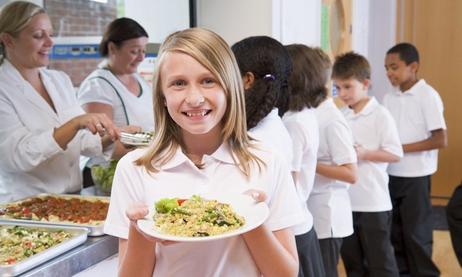
How Diet and Nutrition Impact a Child's Learning Ability

Updated
|
How Diet and Nutrition Impact a Child's Learning Ability
Read why good diet and nutrition is important for high student performance.

While the intake of food is vital for proper performance, many of the widely available and popular foods in schools today are actually hindering children’s abilities to learn. Loaded with sugars, caffeine, chemicals, and sodium, many popular menu items are leaving kids tired, unfocused, jittery, and sick—which not only impact students’ grades and performance, but also influences their behavior and moods.

Lack of Energy and Focus

According to the Society for Neuroscience, recent studies reveal that diets with high levels of saturated fats actually impair learning and memory. Unfortunately, foods with saturated fats are often the most affordable and widely available in schools. French fries, sugary desserts, cheeseburgers, chicken nuggets, and other cafeteria staples are filling kids with food that actually lower their brain power before sending them back to class.

One of the theories that explain the link between saturated fats and brain power is the effects of glucose and sugars in the higher-fat foods. Essentially, glucose comes from carbohydrates, and while glucose is vital for energy, foods that are too high in glucose actually cause a body’s energy levels to drop. As glucose is ingested, the body releases insulin in order to process the newly acquired foods. Normally, after a healthy meal, glucose levels should rise slightly, and a body should feel energized after taking in nutrition.

This video gives a brief explanation of the benefits of a nutritious breakfast.

. . .read more

Children and Co-Ed Instruction

Updated
|
Children and Co-Ed Instruction
Learn about how female and male students learn differently in the classroom.

Should female and male students be taught together in the same classroom? For decades, this debate has enjoyed its equal share of both proponents and opponents. Interestingly, recent research reveals that girls and boys do indeed learn very differently, which adds another level of consideration in the co-ed education debate. In fact, how teachers address the learning discrepancy between the two genders impacts academic performance – a factor critical in the co-ed debate.

The Debate of Cognitive Development

The Recent Academic Data

Indeed, boys and girls face different emotional and physical issues as young students. However, research shows that this difference also delves into the realm of cognitive development. In fact, research has found that boys’ and girls’ cognitive development results in markedly different performance abilities – which partially may be due to the co-ed classroom environment. In recent years, girls have outperformed boys in reading levels assessed on main tests. According to research compiled by educator Sara Mead, while the gap between boys and girls is smaller at the early elementary level, it increases as students reach eighth grade through high school.

When looking at the testing data in science and math, reports once proved that boys’ cognitive performance soared over that of girls’ abilities. While boys are still scoring higher on average than girls in math and science, it has been noted that males “outperform girls only slightly in math and science, in a less drastic proportion than girls’ achievements,” according to Mead.

. . .read more

Full Language Immersion Programs in Public Schools

Updated
|
Full Language Immersion Programs in Public Schools
Learn about the pros and cons of full immersion programs in public schools.

Learning a language can be a difficult process. Most languages are constantly in flux, with new words regularly added to the lexicon, and old ones are dropping away. Just getting a handle on the vocabulary itself can be overwhelming. Throw into the mix the grammar rules, the punctuation nuances, and even all the slang words, and learning a language can seem as daunting a task as climbing Mount Everest barefoot and blindfolded.

Thankfully, there are increasingly more programs and schools designed to help students who wish to learn a language. Immersion schools are one such program, and they are primarily designed for elementary to high school-aged students. For example, Clark High School in Las Vegas, Nevada, offers a full immersion Chinese school for its students, as well as the Pioneer Valley Chinese Immersion Charter School in Massachusetts. For some students, full immersion in a new language is the best way to learn. For others, it is simply too difficult to learn a new language without any “references” to the language they already know. Here are the advantages and disadvantages of full immersion schools, and what to expect if your child attends one.

The advantage of immersion programs

Many people believe the best way for a student to excel in a foreign language is an immersion program. Advocates also suggest the younger the child, the better it is to send them to an immersion program, and that’s why full-immersion daycare or preschool is so popular. These can

. . .read more

Pros And Cons Of Using Technology In The Classroom

Updated
|
Pros And Cons Of Using Technology In The Classroom
Learn about the pros and cons of using technology in the classroom.

With the advent of cell phones, the Internet, MP3 players, DVDs, and more, what should be used in the classroom, and what should be left at the schoolhouse door? Many school administrators, teachers, and parents are pondering this question these days. Like many other complex conundrums, there is no easy answer. There are clear advantages and disadvantages to using new media in the classroom.

If you are a parent, it is up to you to say how much new media should be used in your child’s classroom. The prevalence of both benefits and disadvantages warrants finding the right balance of media in the context of learning.

This video discusses the pros and cons of using technology in the classroom

Learning Advantages of New Media

Less than 30 years ago, fewer than half the households in the United States owned a personal computer, and the Internet was still primarily used by scientists to share information.

Today, the “new media” of learning has leaped off the pages of books and onto the web pages online. For example, volumes of encyclopedias are becoming more obsolete, as this knowledge is easily accessible through the internet and CD-ROMs. Elementary school children are learning to use new media more fluently than their parents, with applications ranging from PowerPoint to Excel. Subsequently, with the potential for learning enclosed in new media, these technologies have found a place in the classroom. While some

. . .read more

Public School vs. Homeschooling

Updated
|
Public School vs. Homeschooling
Which is better? Homeschooling or public school? Some answers here.

In recent years, home-schooled children seem to be “winning.” They have conquered national spelling bees, obtained generous scholarships to elite universities, and have even been crowned beauty queens. If home-schooled kids are enjoying such success, it is understandable why any parent would ask, “Is regular or home school best for my child?”
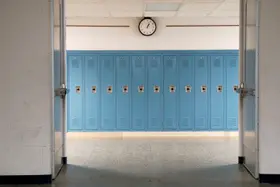


Like many questions about your child’s education, this particular one does not have an easy answer. It is important to consider many factors before deciding whether your child should stay at home to learn or should be sent to a regular public school.

Home environment vs. school environment

For many advocates of either homeschooling or public school education, the environment offered by either situation is the determining factor as to whether a child should be home-schooled or sent to a regular public school.

The calm, safe environment of home school

Proponents of homeschooling believe that children thrive better in a safe, comfortable environment with which they are familiar. Ironically, so do advocates of public schooling.

However, home-schoolers believe the home is the safest, most secure environment in which a child can learn. At home, a child does not have to deal with peer pressure or with fitting in with the popular cliques. A child can just “be.” This gives the child the opportunity to focus on the lessons being taught and on the educational expectations required of him or her.

Orkid Jalali offers her

. . .read more

Recent Articles

About Public Schools

OVERVIEW OF PUBLIC SCHOOLS
A comprehensive look at the U.S. public school system, including history, governing bodies, funding, and services. Compare private, public and charter schools. Learn more about Magnet school programs and get tips on choosing the right school for your child.
TYPES OF PUBLIC SCHOOLS
Explore the different types of public schools, from charter to language immersion, and learn about the unique pros and cons of each type. Is a co-ed or single sex classroom best for your child? Charter school or magnet? Read expert advice and get valuable tips on the various public education programs available and how to choose what works best for your family.
TECHNOLOGY ON CAMPUS
From eBooks to web cams, technology on campus continues to grow. Learn how the latest technology impacts your child’s education. Get tips on the best ways to integrate technology into education and stay abreast of the latest developments and challenges facing schools.
HEALTH AND NUTRITION AT SCHOOL
From vending machines to Jamie Oliver, bed bugs to tuberculosis, we provide an in-depth look at health and wellness in public schools. Help your kids stay healthy on campus and learn about current health epidemics, vaccination requirements, physical fitness programs and the latest food initiatives.
BACK TO SCHOOL
Learn more about preparing your child and wallet for a new school year. Inside you’ll find valuable advice to help your family prepare for the transition from swimsuits to school. While there is no tuition, public school education does not come without costs. Learn more about budgeting for a new school year and get great money saving tips.
STUDENT POPULATIONS
The latest trends, laws and resources for a variety of student populations. Every child has different needs, and this section offers helpful information for LGBT, special education, gifted, low-income, and minority students.