
About Public Schools

Here we cover the history of public schools, explain the various types and discuss their pros/cons. Learn more about technology on campus, health and nutrition issues, and the latest information related to a variety of student populations.

View the most popular articles in About Public Schools:

The Future of Public Education in America (2025 Outlook)

Updated
|
The Future of Public Education in America (2025 Outlook)
Explore how public education in America is evolving in 2025 — funding trends, policy shifts, demographic change, and what it means for students, parents, and educators.

The Future of Public Education in America

In 2025, the landscape of public education in America stands at a crossroads. Changes in demographics, funding, policy, technology and public sentiment are reshaping what it means for students, parents and educators to engage with the public school system. As we chart the future of public education in America, understanding where we are now—and where we might go—is essential for informed decision-making.

Current Snapshot: Strengths and Stresses

Enrollment and staffing

For the 2025 school year, about 54.1 million K-12 students are enrolled in public schools across the United States. Meanwhile, the workforce comprises approximately 5.7 million teachers and nearly 10 million staff members, including support personnel. Census.gov


Despite this scale, the sector is dealing with persistent challenges: a recent survey from RAND Corporation shows that in the 2024-25 academic year, 30 percent or more of students in many urban districts missed 10 percent or more of school days (the definition of chronic absenteeism). These figures point to a core truth: while public education serves tens of millions of students, the system is under strain.

Funding and expenditure

Public school funding remains a major focal point. According to data compiled by EducationData.org, per-pupil spending in many states ranges from about US $12,000 up to more than $30,000 in high-cost regions. Education Data Initiative On a national scale, the Organisation for Economic Co‑operation and Development (OECD)

. . .read more

Standardized Tests in 2025: What Parents & Educators Must Know

Updated
|
Standardized Tests in 2025: What Parents & Educators Must Know
Explore the 2025 landscape of standardized tests—policies, performance trends, and practical insights for students, parents, and schools.

Introduction

Standardized tests have long played a central role in U.S. K-12 and post-secondary education—used for everything from measuring student progress to informing school accountability and shaping college admissions. As we enter 2025, the landscape for standardized testing continues to shift in meaningful ways. From digital test delivery and evolving college admissions policies to declining student proficiency and renewed questions about equity, the changes matter deeply for parents, students, educators and schools.

This article examines the current state of standardized testing in 2025: how policies have changed, what recent performance data show, how colleges are responding, and what practical steps families and schools can take to navigate this evolving terrain. In particular, we reference authoritative sources including the National Assessment of Educational Progress (NAEP) and federal education policy, and link to relevant resources—including one of our own reviews at Boarding School Review.

What We Mean by “Standardized Tests”

“Standardized tests” is a broad term that can refer to a variety of assessments administered under consistent conditions, with the goal of measuring student achievement or growth across different students, schools or jurisdictions. In K-12 settings this often includes state-level assessments (for example, in grades 3-8 and 11), diagnostic and interim assessments, and nationally-normed exams like the Scholastic Assessment Test (SAT) or the ACT in the college admissions context.
These tests serve multiple functions: measuring what students know and can do, informing instruction, enabling comparisons across schools or states, supporting accountability systems and guiding admission or

. . .read more

COVID-19’s Enduring Effects on U.S. Public Schools (2025)

Updated
|
COVID-19’s Enduring Effects on U.S. Public Schools (2025)
How COVID-19 continues shaping U.S. public schools in 2025: enrollment declines, recovery efforts, mental health, and policy challenges.

COVID-19’s Lasting Impact on U.S. Public Schools (2025)

The COVID-19 pandemic may no longer dominate headlines, but its imprint on U.S. public schools remains significant in 2025. What once looked like a temporary disruption has evolved into a long tail of academic deficits, enrollment shifts, staffing stress, psychological strains, and equity challenges. In this updated analysis, we revisit how COVID-19’s lasting impact on U.S. public schools continues to ripple through the system, drawing on new data, district examples, and expert insight.

1. Lingering Academic Recovery and Learning Loss

Despite efforts to “catch up,” many districts report that students remain behind where pre-pandemic cohorts once stood. According to research from UC Davis, as of spring 2024, California students lagged roughly half a grade level behind their 2019 peers in core subjects. The learning gap is not uniform: lower-income, rural, and non-White students have tended to recover more slowly, intensifying educational inequities.

A 2025 Harvard analysis notes that national test performance has not rebounded to pre-COVID norms, especially in mathematics and reading, with enduring declines in key states. Moreover, the Education Recovery Scorecard shows that while some districts have surpassed pre-pandemic levels in both math and reading, no state has fully done so.

In practice, districts like Toledo, Ohio, have extended school days, added summer academies, and leveraged small-group tutoring to accelerate recovery. Yet even well-resourced districts caution that extra supports may need

. . .read more

Broward County School Bus Service Update 2025

Updated
|
Broward County School Bus Service Update 2025
A 2025 review of Broward County public school bus service: challenges, innovations, and what parents should know.

Broward County Bus Service Issues in 2025

Broward County Public Schools (BCPS), one of the largest districts in Florida, continues to face persistent challenges in providing reliable school-bus transportation. While the district has taken significant steps toward modernization and safety, parents, administrators, and policymakers remain concerned about delays, rider experience, equity, and sustainability. This updated 2025 review revisits longstanding issues, highlights recent developments, and provides a forward-looking perspective for families and the community.

Context: Scale, Scope, and Constraints

As of the 2023–24 school year, BCPS enrolled roughly 251,000 students across 326 schools and educational centers, making it among the largest school districts in the nation. The Student Transportation & Fleet Services division operates just over 1,000 buses on daily routes that carry more than 73,000 students, with vehicles collectively traveling over 16 million miles each year.

Despite careful organization of routes and service zones, inequities and reliability issues remain a core challenge. In 2025, BCPS must balance budget pressures, driver shortages, and new state mandates while adapting to shifting demographics and technology.

Historical Issues

Parents have long identified several recurring transportation problems:

  • Chronic delays caused by traffic congestion and inconsistent scheduling.

  • Uneven service coverage, leaving some families without convenient access.

  • Driver shortages, leading to cancellations or last-minute changes.

  • Mechanical breakdowns among older buses.

  • Safety

. . .read more

10 Major Challenges Facing Public Schools in 2025

Updated
|
10 Major Challenges Facing Public Schools in 2025
Explore the 10 biggest challenges facing U.S. public schools in 2025, from funding shortages to mental health and technology gaps.

10 Major Challenges Facing Public Schools in 2025

The American public education system stands at a critical crossroads in 2025. While progress has been made since the pandemic, public schools face unprecedented pressures that directly impact student outcomes, teacher well-being, and long-term institutional stability. Today’s educators must navigate the complex realities of shifting demographics, technology gaps, rising mental health needs, and financial constraints.

This article examines ten of the most pressing challenges confronting U.S. public schools in 2025—why they matter, how they affect students and educators, and what potential solutions may look like.

1. Classroom Size

Classroom overcrowding continues to plague many districts, particularly in growing suburban and urban areas. According to the National Center for Education Statistics (NCES, 2024), the average public school class size for grades 9–12 is now 27 students, with some high-growth states such as Texas and Florida reporting averages above 30.

Research consistently shows that smaller class sizes in the early grades (15–18 students) significantly boost academic achievement and long-term success, especially for students from low-income households. Yet staffing shortages and funding cuts often force districts to raise class size caps.

A Fairfax County, Virginia proposal in 2024 to increase class sizes by two students per grade sparked community backlash, reflecting nationwide concerns about teacher burnout and diminished individual student support.

2. Poverty

Student poverty remains one of the most significant challenges facing public schools. As of 2025, 21% of U.S.

. . .read more

Recent Articles

About Public Schools

OVERVIEW OF PUBLIC SCHOOLS
A comprehensive look at the U.S. public school system, including history, governing bodies, funding, and services. Compare private, public and charter schools. Learn more about Magnet school programs and get tips on choosing the right school for your child.
TYPES OF PUBLIC SCHOOLS
Explore the different types of public schools, from charter to language immersion, and learn about the unique pros and cons of each type. Is a co-ed or single sex classroom best for your child? Charter school or magnet? Read expert advice and get valuable tips on the various public education programs available and how to choose what works best for your family.
TECHNOLOGY ON CAMPUS
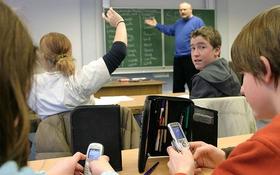
From eBooks to web cams, technology on campus continues to grow. Learn how the latest technology impacts your child’s education. Get tips on the best ways to integrate technology into education and stay abreast of the latest developments and challenges facing schools.
HEALTH AND NUTRITION AT SCHOOL
From vending machines to Jamie Oliver, bed bugs to tuberculosis, we provide an in-depth look at health and wellness in public schools. Help your kids stay healthy on campus and learn about current health epidemics, vaccination requirements, physical fitness programs and the latest food initiatives.
BACK TO SCHOOL
Learn more about preparing your child and wallet for a new school year. Inside you’ll find valuable advice to help your family prepare for the transition from swimsuits to school. While there is no tuition, public school education does not come without costs. Learn more about budgeting for a new school year and get great money saving tips.
STUDENT POPULATIONS
The latest trends, laws and resources for a variety of student populations. Every child has different needs, and this section offers helpful information for LGBT, special education, gifted, low-income, and minority students.